How to Due-Diligence an IPO in 30 Minutes with an AI Research Agent
July 12, 2026 · DWork Research
How to Due-Diligence an IPO in 30 Minutes with an AI Research Agent
It's IPO week. A company you've been half-watching — say SK Hynix, filing for a $26.5B US listing on the back of the AI-memory boom — prices in a few days, and you have exactly one evening after work to decide whether it's worth a position. You know the drill. Open the F-1 prospectus (300-plus pages), skim the risk factors, hunt for the actual revenue drivers, try to separate the HBM hype from the margins, then cross-check three news articles that all quote the same press release. By the time you've built a real mental model it's midnight, and you've read maybe a third of what you meant to.
Individual investors rarely lose to institutions on judgment. They lose on hours. This is a workflow for getting a solid 30-page read done in about 30 minutes — with citations you can click back to the source.
The workflow
Step 1 — Open a workspace and drop the brief
When you sign up you land on an empty workspace with three starter cards (Research / Track / Produce) and your credits meter in the corner.
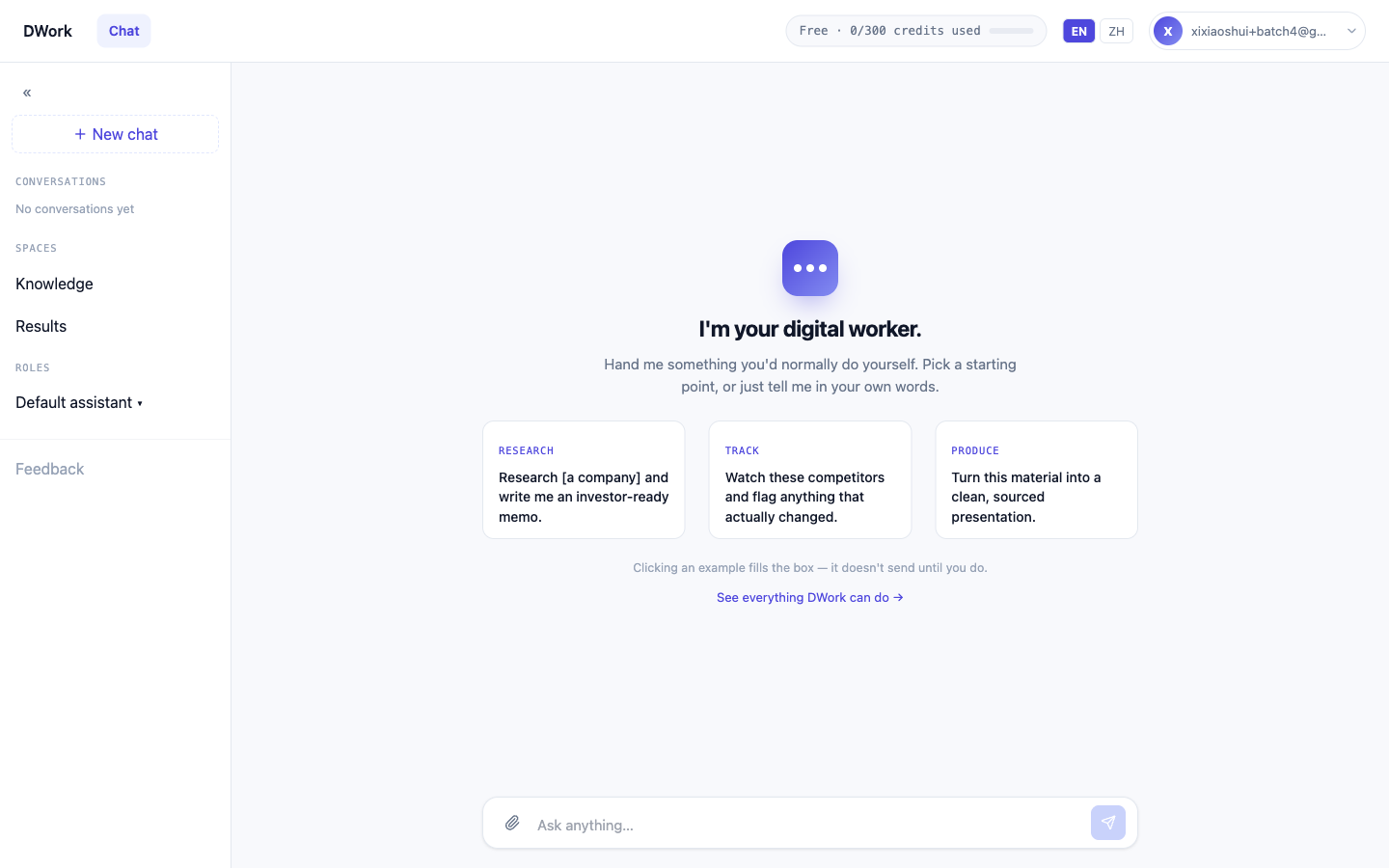
Don't overthink the first message. Treat it like briefing a sharp junior analyst — tell it the company, the sources you trust, and the questions you actually care about. Paste this in:
Do a due-diligence deep dive on the SK Hynix US IPO. Work from the F-1/prospectus, the company's official filings, and reputable news. Cover: what the business is and how it makes money, the AI-memory (HBM) demand thesis, competitive position, revenue and margin trend, use of proceeds, and the top risks the company itself discloses. Cite primary sources at the section level so I can verify each claim.
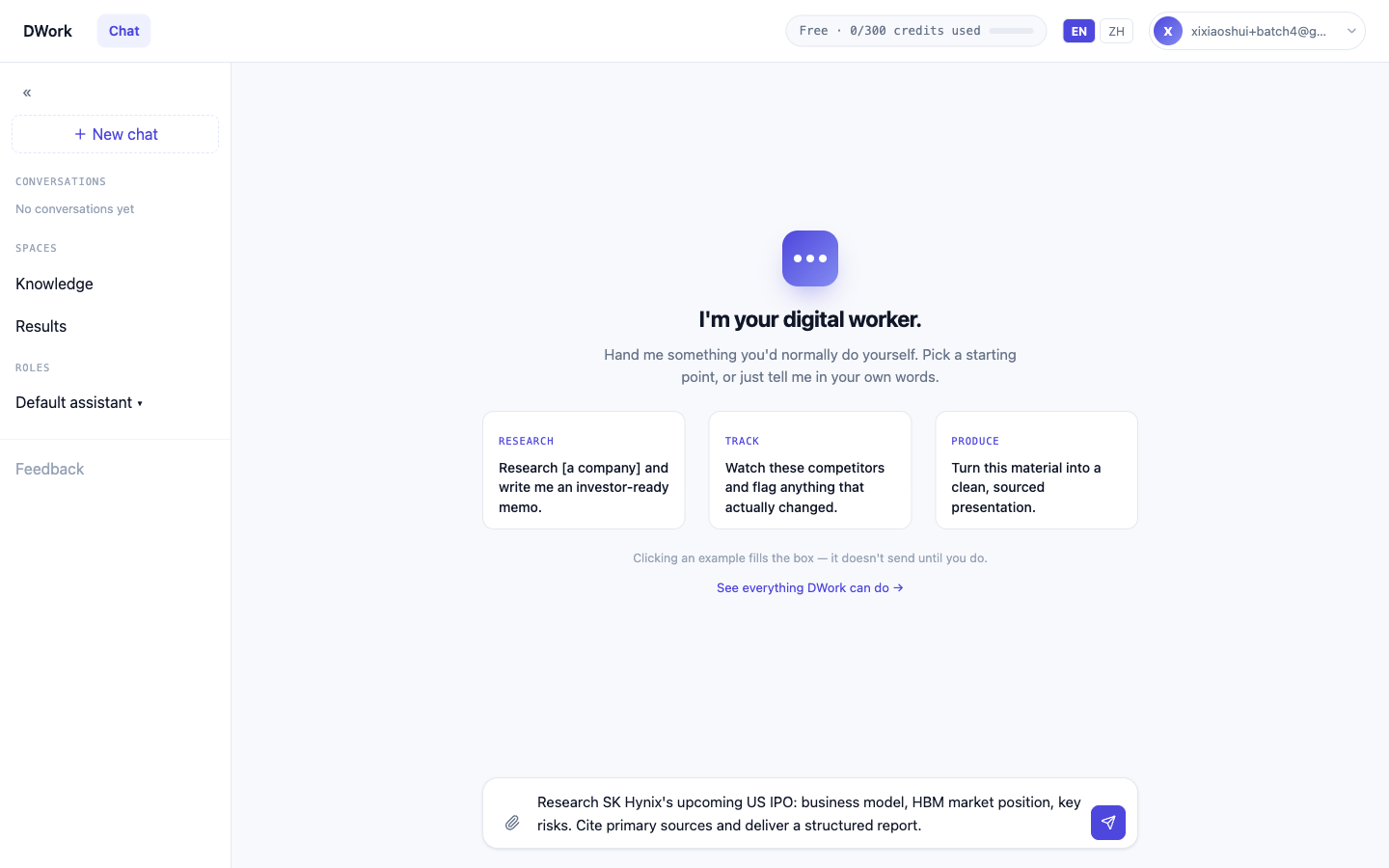
The last sentence matters. Asking for section-level citations up front is what turns this from "AI summary" into something you can defend to yourself.
Step 2 — Let it read the prospectus and cross-check
Now it goes to work: pulling the prospectus and official filings, cross-referencing them against news coverage, and cross-validating claims across multiple sources instead of trusting one. What comes back is a structured report where each point is footnoted to where it came from — so when it says "HBM drives the margin story," you can click through to the exact section of the filing that says so.
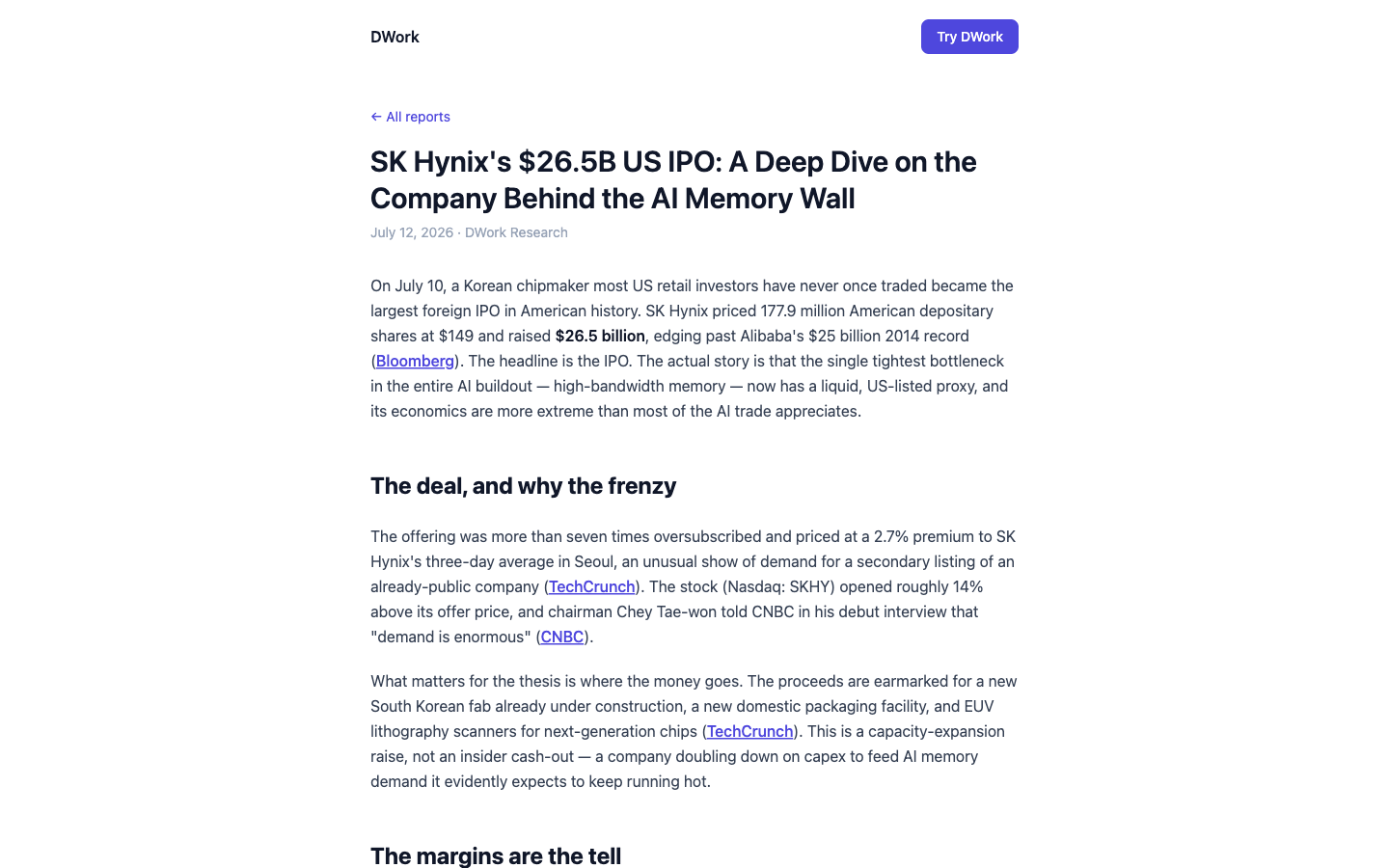
This is the step that used to eat your whole evening. Read the report the way you'd read a good analyst note: check the citations on anything that surprises you.
Step 3 — Interrogate the draft
You're not done reading — you're starting a conversation. The report is the opening move; the value is in the follow-ups. Ask, in plain language:
What are the three biggest risks disclosed in the prospectus, and how does management say they're addressing each? Then show me how revenue and gross margin moved over the last three reported periods.
It answers against the same sourced material, so the follow-ups stay grounded in the filing rather than drifting into vibes. Keep pulling threads until the gaps in your understanding close.
Step 4 — Turn it into something you can actually use
A chat thread isn't a decision document. DWork can hand you a real deliverable — a structured memo, a slide deck, or an Excel sheet — from the same research. The scenario gallery shows the task types and roughly what each costs in credits.
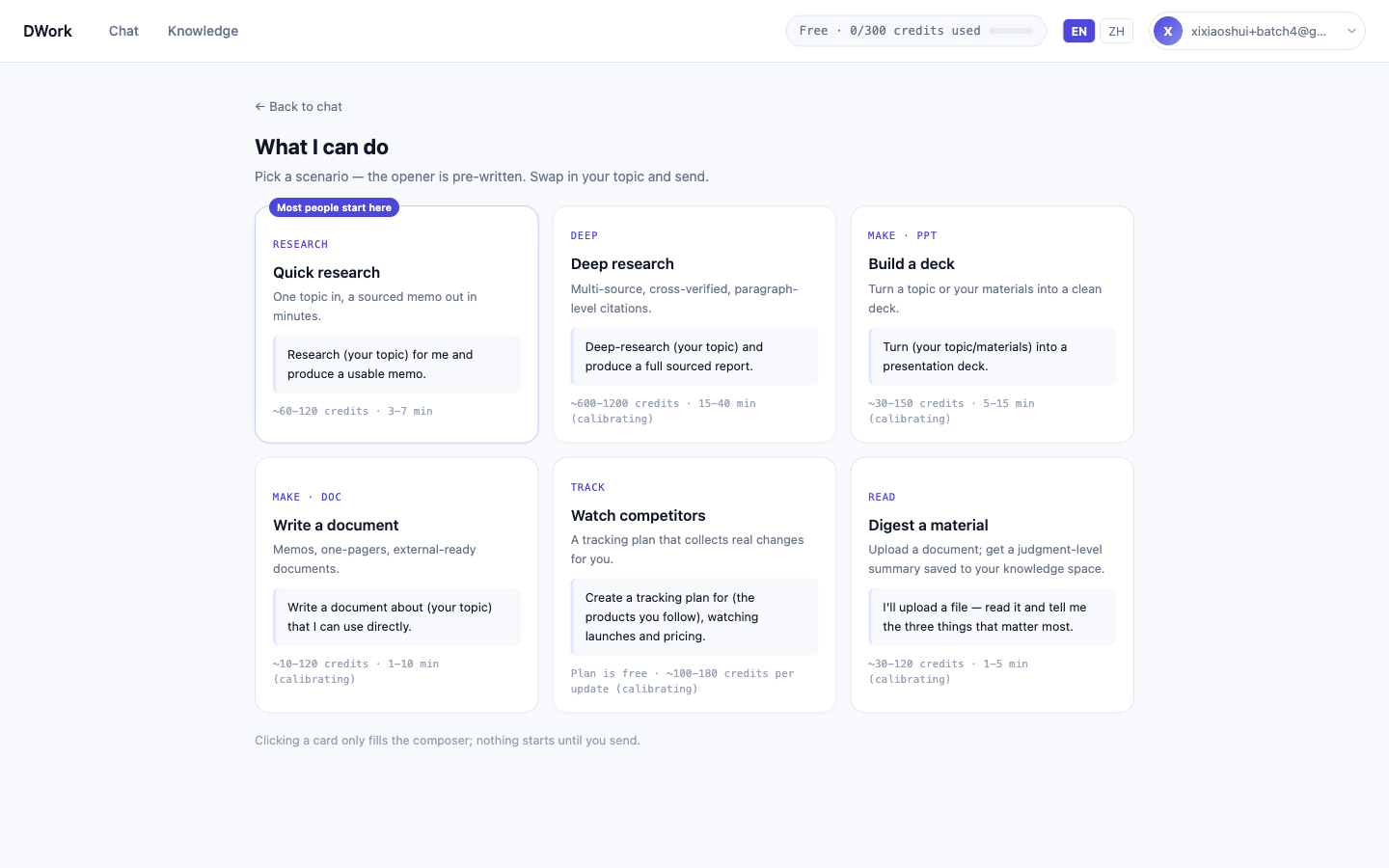
Try:
Build me an Excel sheet with the key figures — revenue, gross margin, net income, shares offered, use of proceeds, valuation range — one column per reported period, and a separate tab listing the disclosed risk factors with the source citation for each.
Now you have a working file instead of a wall of text.
Step 5 — Put it on autopilot until pricing day
An IPO story moves right up to the bell — updated ranges, allocation news, fresh commentary. Instead of refreshing headlines, hand it off:
Track the SK Hynix IPO and email me an update whenever there's a material development — a change to the offering size or price range, new filings, or notable coverage — through pricing day.
DWork runs the check on a schedule and emails you the delta. You stop babysitting the story and just read the summary when it lands.
Proof
This isn't hypothetical — it's the exact workflow behind a report we published and put in our public library:
SK Hynix's $26.5B US IPO: A Deep Dive on the Company Behind the AI Memory Wall
Open it and check the citations yourself. That's the standard the workflow above is aiming for.
What to watch out for
Two honest limits, because knowing them makes the tool more useful, not less:
- It's not a live quote screen. DWork works from filings, official documents, and news — not real-time or intraday prices. It won't tell you where the stock is trading right now, or the exact price it settles at on IPO morning. Keep your broker's quote screen open for that; use DWork for the homework, not the ticker.
- Analysis is not advice. It will lay out the business, the numbers, and the disclosed risks with sources attached — but it won't tell you whether to buy, and it doesn't reach into paywalled terminals like Bloomberg or FactSet. It structures the evidence; the position is your call.
Used that way — do the reading in minutes, keep the decision human — you walk into pricing day having actually done the work, not just skimmed the headlines.
Try this workflow free → https://dwork.ai/sign-up